Bariatric transfer
Patient measurements
Work out the patient's width at the bedside, then read the whole line back to the service arranging the transfer.
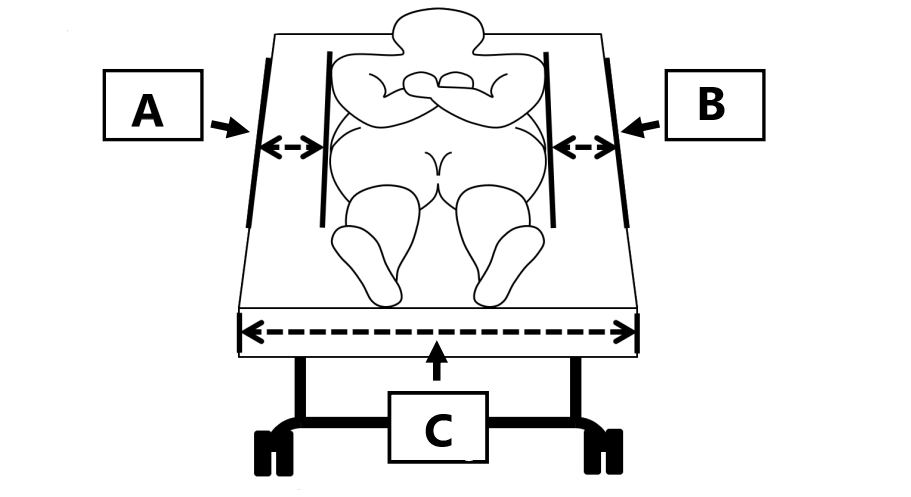
Width
If the patient is right against one edge, enter 0 for that side.
Weight and height
Patient width
Accuracy matters more than speed. Patients are rarely knocked back on size alone — but inaccurate figures and guesses are a known cause of significant transport delays, because the wrong aircraft, crew or equipment gets configured.
If your patient is time-critical and measuring would delay care, say so on the phone and flag anything you give as an estimate. An unflagged guess is what causes the problem.
How to measure
- 1If it's clinically appropriate, lay the patient supine. You'll need a tape measure or a ruler.
- 2Find the patient's widest part — broad shoulders, a large abdominal apron, or wide hips and buttocks. Arms are excluded.
- 3Take each measurement in a straight line, to the mattress edge rather than the bed frame. Drop the rails if they're in the way.
- AMattress edge to the patient's widest part, one side.
- BMattress edge to the patient's widest part, other side.
- CThe full width of the mattress.
Width here is a planning figure. A patient spreads differently on a hospital mattress than on a narrow stretcher, so the crew may re-check on arrival.